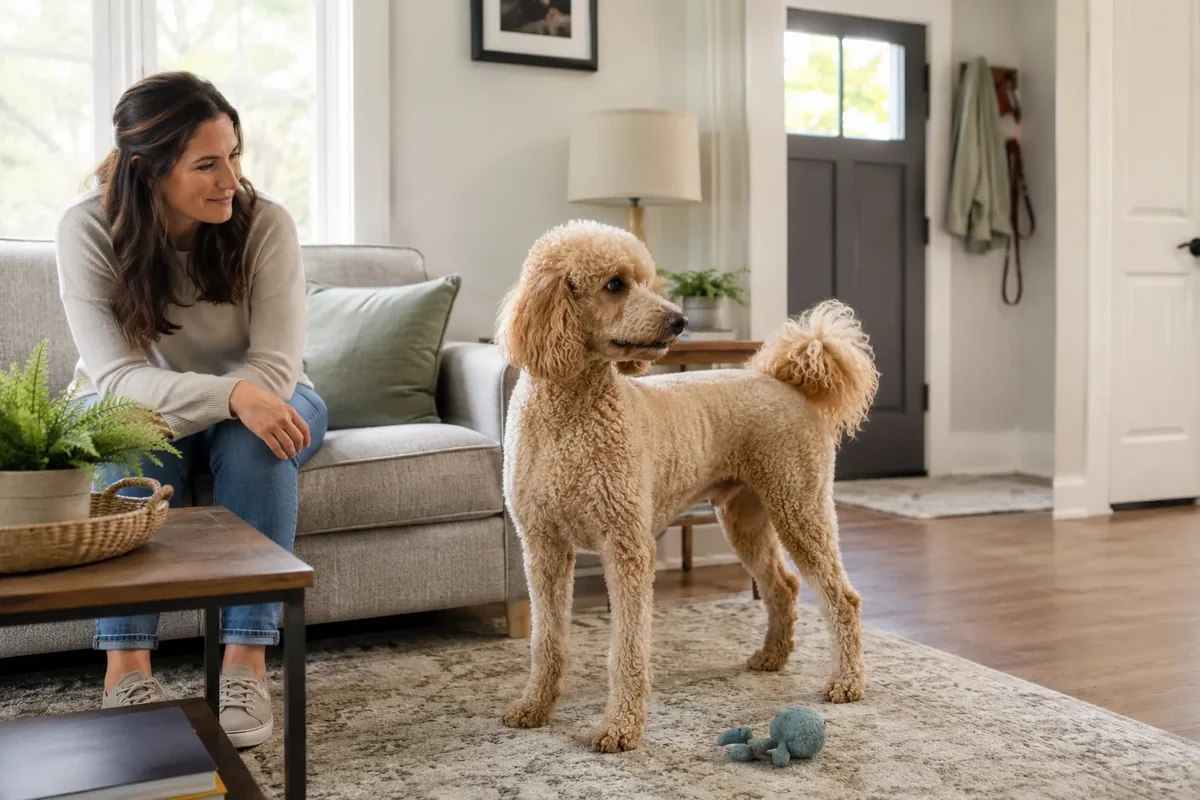
Poodles get sold to people on two ideas: they are extremely smart, and they do not leave much hair around the house.
Both are good reasons to like the breed.
Neither tells you what owning one is actually like.
The same coat that does not cover your couch with loose fur needs brushing, clipping, and regular attention. The same intelligence that makes training fun also means a bored Poodle can become very good at finding its own projects.
And then there is the haircut.
Ignore it for a minute.
Underneath the show-dog image is an active, people-focused dog that was bred to work, learns quickly, and usually wants to be involved in whatever the household is doing.
For some owners, that combination is almost perfect.
For others, it is more dog maintenance than expected.
There Isn't Just One Poodle
In the U.S., Poodles come in three recognized varieties: Standard, Miniature, and Toy.
They are the same breed, but the day-to-day experience is not identical.
A Standard Poodle is a fairly substantial dog. A Toy can fit under one arm. A Miniature sits somewhere between those two worlds.
The AKC separates them mainly by height:
| Poodle variety | Adult height |
|---|---|
| Standard | Over 15 inches |
| Miniature | Over 10 and up to 15 inches |
| Toy | 10 inches or under |
That difference affects more than how much room the dog takes up.
A Standard is more dog to bathe, dry, lift into a car, feed, exercise, and groom. A Toy takes up very little space, but a tiny dog also needs more careful handling. A Miniature appeals to a lot of people because it gives them much of the Poodle personality without the size of a Standard.
So before getting too far into the pros and cons, decide which Poodle you are actually picturing.
The Low-Shedding Coat Is a Real Advantage
If dog hair on the couch drives you crazy, a Poodle has an obvious appeal.
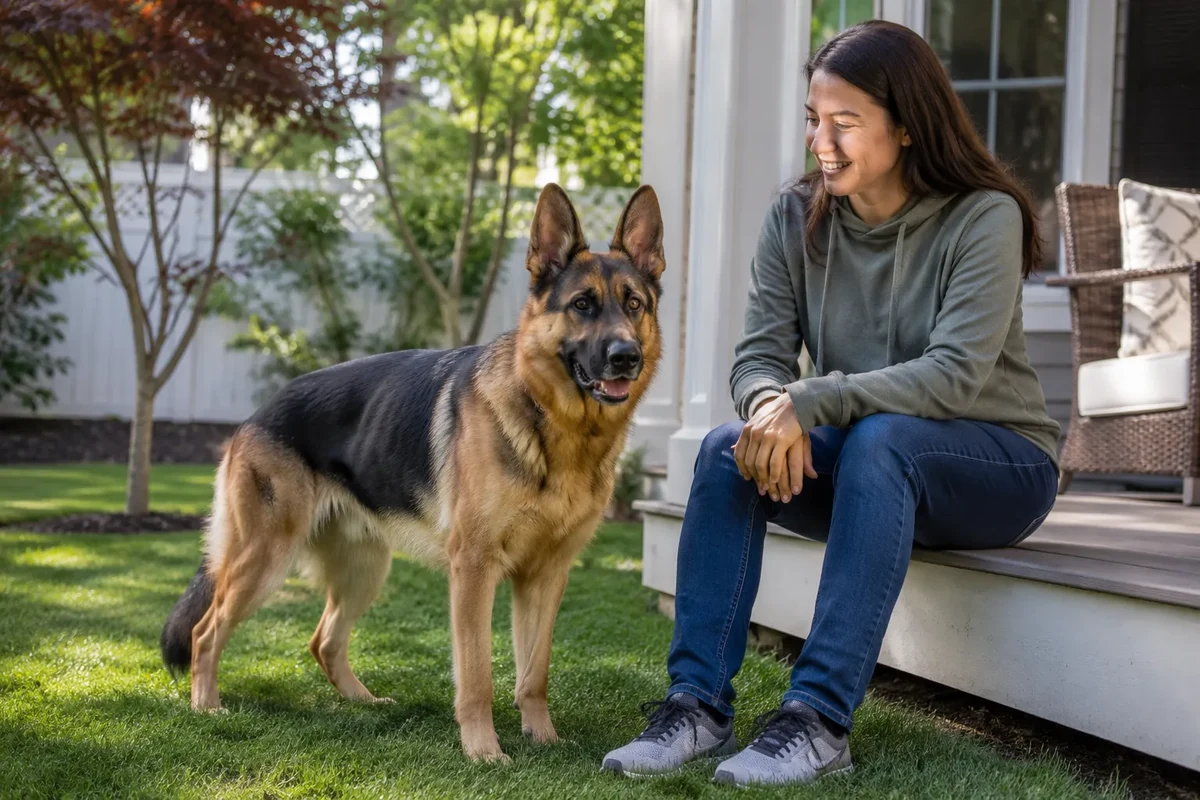
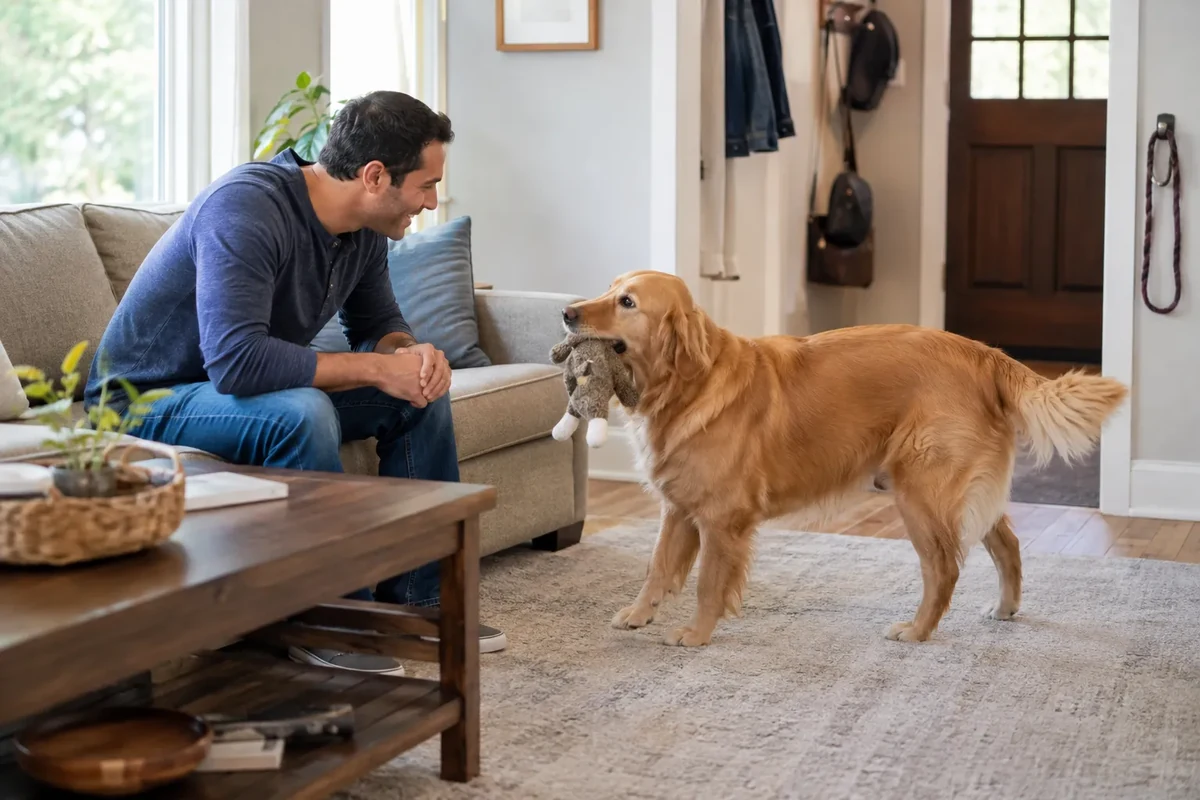
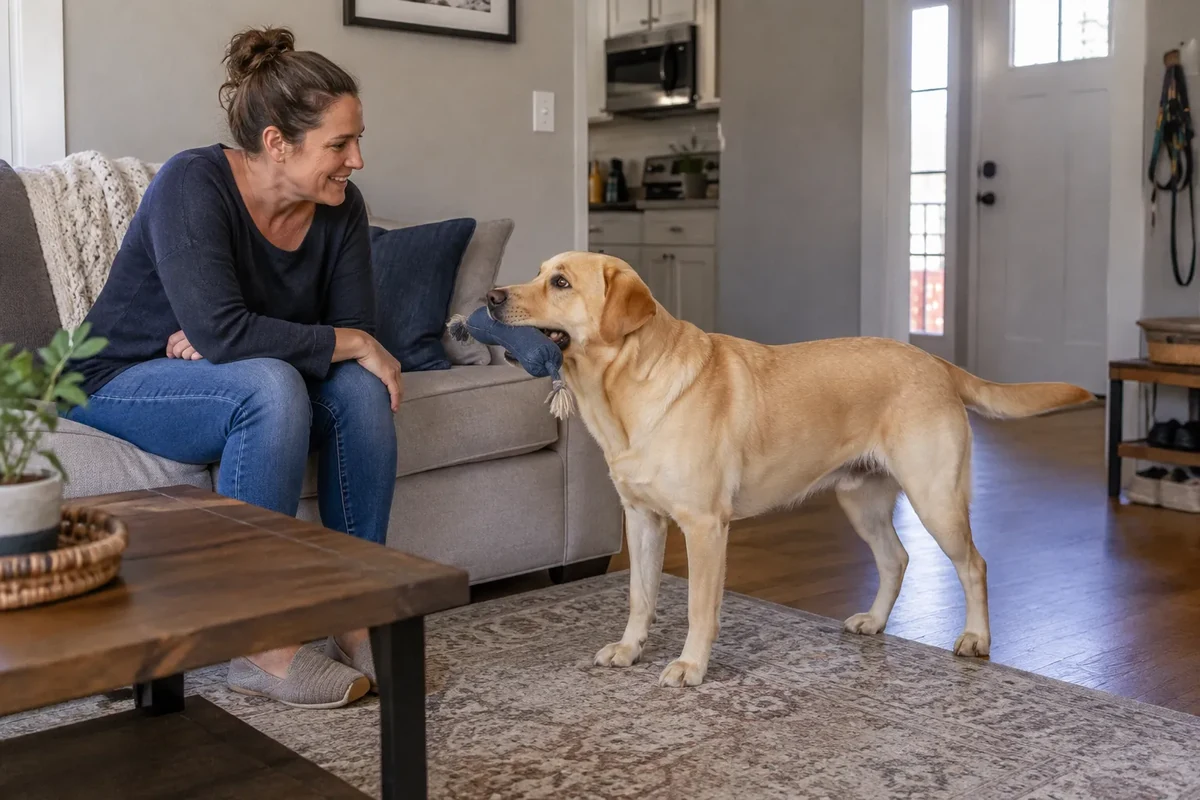
Their curly coat usually releases much less visible hair into the home than the coat of a Labrador, Golden Retriever, German Shepherd, or another heavier-shedding breed.
That changes household cleaning.
You are less likely to find large clumps collecting against the baseboards or a new layer of dog hair on dark pants every time you sit down.
But the missing hair has not magically disappeared.
A lot of it stays caught in the coat.
And that brings you straight to the biggest Poodle tradeoff.
The Coat Is Work
A Poodle is low shedding.
It is not low maintenance.
Those are very different things.
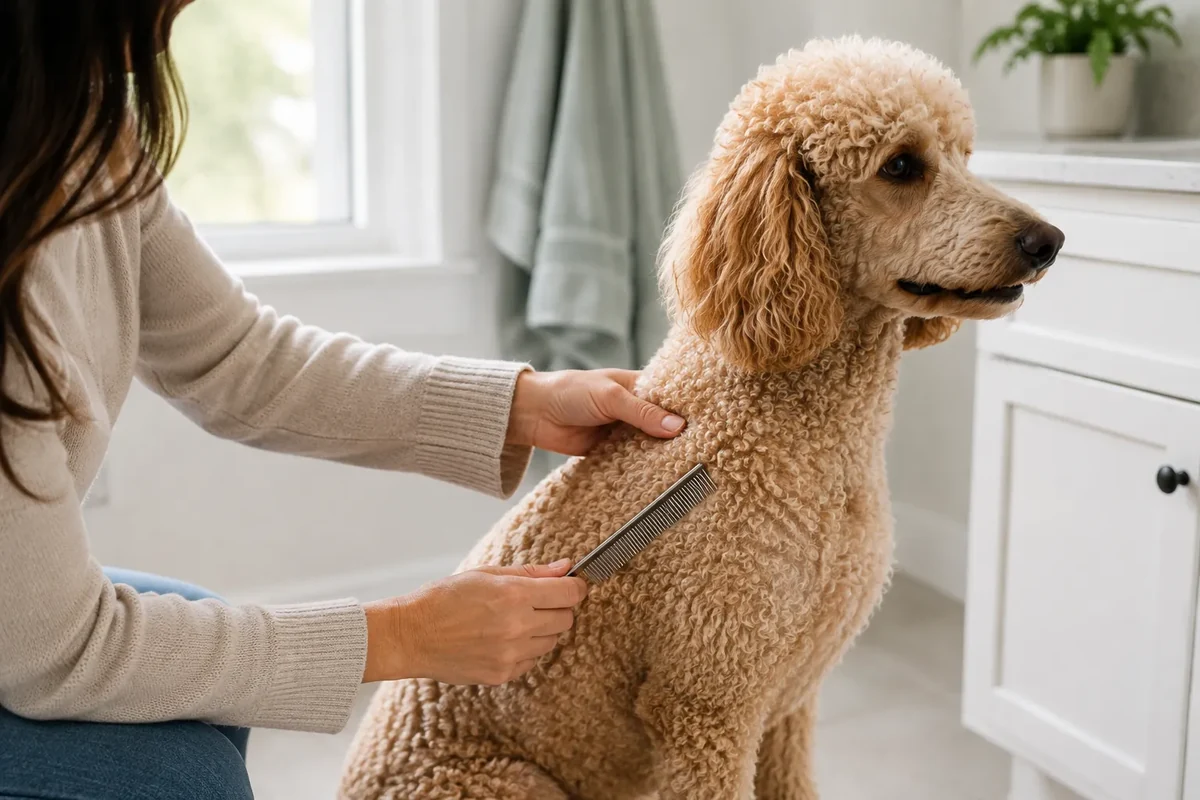
If the coat is allowed to grow, it can tangle and mat. Areas behind the ears, around the legs, under a harness, and wherever the coat rubs against itself deserve particular attention.
Keeping the dog in a short pet clip makes life easier, but it does not eliminate grooming.
There will still be brushing, bathing, clipping, nails, ears, and the general maintenance that comes with a coat that keeps growing.
Many owners use a professional groomer. Some learn to clip their dogs themselves. Others do the brushing and basic upkeep at home and leave the haircut to a groomer.
There is no useful universal rule saying every Poodle must visit a groomer exactly every six or eight weeks.
A Standard in a fluffy clip and a Toy kept very short are not the same job.
But grooming needs to be part of the plan before the dog comes home, not something discovered after the first mats appear.
Smart Is Good. Smart Is Also Work.
Poodles really are quick learners.
That is one of the nicest things about them.
Basic training can move fast when the dog enjoys working with you. Many Poodles also do well with retrieving, obedience, agility, scent games, tricks, and other activities where they get to figure something out.
The catch is that a dog does not stop having a brain once the training session ends.
A Poodle that spends most of the day with nothing interesting to do may invent something.
Maybe that means barking at everything outside.
Maybe it means stealing objects because that reliably starts a game of chase.
Maybe the dog simply follows you from room to room waiting for the next thing to happen.
This is why calling Poodles “easy because they are smart” is misleading.
Their intelligence can make them easier to teach.
It does not necessarily make them easier to ignore.
They Are More Athletic Than They Look
The fancy haircut has done strange things to the Poodle's public image.
People who have mostly seen show Poodles can be surprised by how athletic the breed is.
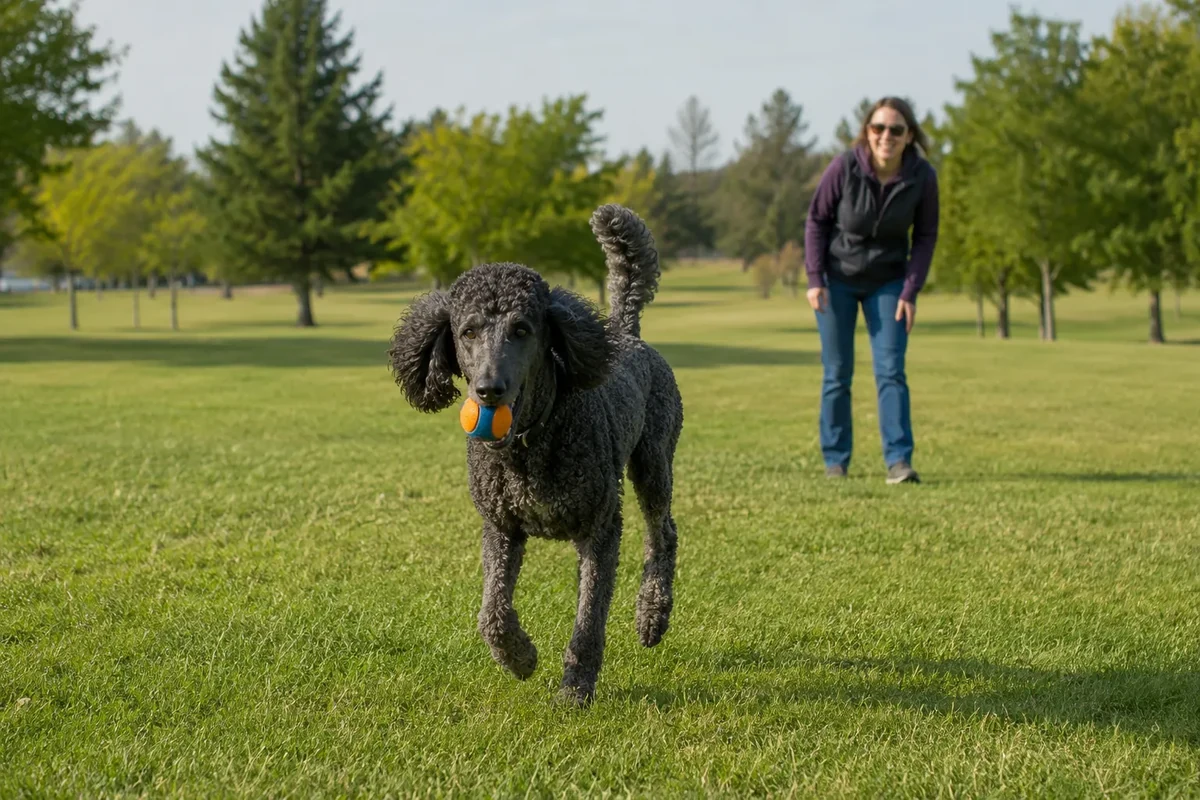
Standards in particular can be energetic dogs that enjoy long walks, retrieving, swimming, hiking, training, and dog sports.
That is not accidental. The breed has a working retriever background.
Miniatures and Toys are obviously working with much smaller bodies, but they are not decorative objects either. Many are lively dogs that enjoy walks, play, and training.
This is good news if you want a dog that can actually do things with you.
It is less good if you chose a Poodle because you assumed the curly coat came attached to a quiet couch ornament.
You Don't Need a Huge Yard
A Poodle can live in an apartment.
That statement needs a second sentence, though.
An apartment does not exercise the dog for you.
Neither does a large fenced yard.
A Poodle living in a smaller home can do very well if there are regular walks, bathroom breaks, training, play, and enough going on to keep life interesting.
A bored Standard Poodle in a suburban house with a backyard is still a bored Standard Poodle.
For apartment owners, barking may be the bigger concern.
Some Poodles are fairly quiet. Others notice every delivery, hallway noise, visitor, dog outside, and suspicious leaf.
Good training helps, but there is no breed-level promise that your particular Poodle will be silent.
They Tend to Be Very Involved With Their People
This can be one of the best parts of owning one.
Poodles generally are not the kind of dogs people choose because they want a pet that quietly lives a separate life in another room.
Many want to know what you are doing.
They notice routines.
They learn when dinner happens.
They know what shoes mean a walk.
They may follow household activity much more closely than a person expected when choosing a dog largely because it did not shed much.
For someone who wants a real companion, this is a plus.
For someone whose ideal dog is highly independent and asks for very little interaction, it may become tiring.
Are They Good Family Dogs?
Often, yes.
But “good family dog” gets used so broadly that it almost stops meaning anything.
A well-socialized Poodle with an appropriate temperament can be a great family companion. They are trainable, interactive, and often enjoy being part of family activity.
That does not mean every Poodle will adore every child automatically.
Children still need to learn how to behave around dogs.
And the size of the dog changes the practical picture.
A Standard is large enough to knock over a small child accidentally.
A Toy is small enough for a child to hurt accidentally.
Adult supervision matters in both cases, just for different reasons.
The Hypoallergenic Label Is Too Simple
People with allergies often end up looking at Poodles because the breed sheds relatively little.
That makes sense.
Calling them completely hypoallergenic does not.
People can react to proteins associated with dander, saliva, and other material from the dog. Low shedding can reduce one way allergens spread around a home, but it does not guarantee that a particular person will tolerate a particular Poodle.
If allergies are one of the main reasons you are considering the breed, spend real time around Poodles before making the decision.
A breed label is not an allergy test.
Ear Care Gets Overcomplicated Online
Poodle ears need to be checked like any other dog's ears, and some Poodles have recurring ear problems.
What owners should not do is assume that every Poodle automatically needs hair pulled out of the ear canal at home.
Ear maintenance should fit the individual dog.
If there is redness, odor, discharge, repeated head shaking, obvious discomfort, or persistent scratching, that is a veterinarian question rather than a reason to keep cleaning more aggressively.
A groomer or veterinarian can also tell you whether hair around the ears needs any specific attention for your dog.
There is no prize for doing more ear maintenance than necessary.
Health Depends Partly on Which Poodle You Choose
Standard, Miniature, and Toy Poodles do not have identical health concerns.
That is one reason a good breeder matters.
If you are buying a puppy, ask what health testing has been done on both parents and whether those tests are appropriate for that Poodle variety.
A breeder saying that the parents have “never been sick” is not the same thing as documented health screening.
Standard Poodles also belong to the larger, deep-chested group of dogs in which GDV, often called bloat, is an important concern. It can be life-threatening and needs immediate veterinary attention.
That is worth knowing before owning a Standard, but a breed article is not the place for a homemade prevention formula. A veterinarian can discuss individual risk and preventive options with you.
Grooming Changes the Cost of Ownership
People sometimes look at the price of the puppy and forget the coat.
The coat keeps sending invoices.
If you use a professional groomer, grooming becomes a recurring household expense.
The actual price depends on where you live, the size of the dog, coat condition, haircut, and how much work is needed.
A Standard usually costs more to groom than a Toy simply because there is much more dog and much more coat.
Home grooming can reduce that expense, but then you are spending your own time and buying equipment.
This does not make Poodles unusually bad value.
It is just something to include in the budget before choosing one.
A low-shedding dog is not automatically a cheap dog to maintain.
First-Time Owners Can Do Fine With a Poodle
There is no good reason to say Poodles are only for experienced dog owners.
A first-time owner who wants to learn can do very well with one.
The trainability helps.
So does the fact that many Poodles genuinely enjoy interacting with people.
What does not work as well is assuming that an intelligent breed trains itself.
A first dog still means learning about house training, socialization, grooming, veterinary care, exercise, body language, and all the other things that come with living with a dog.
If that sounds interesting rather than annoying, a Poodle can be a very rewarding first breed.
So What Are the Actual Downsides?
The grooming is probably the biggest one.
Not because Poodle grooming is impossible, but because you cannot just forget about the coat for months.
The second is that many Poodles expect a fair amount of interaction. They are smart, active dogs and can be more demanding than their polished appearance suggests.
There can also be barking, especially in alert individuals.
Professional grooming costs add up.
Some people with allergies will still react to them.
And if you are considering a Standard, remember that this is a real medium-to-large athletic dog. Choosing one solely because you like the breed's intelligence or coat can leave you with more dog than you expected.
None of those are reasons not to get a Poodle.
They are reasons to know what you are signing up for.
Which Size Makes the Most Sense?
A Standard Poodle is the obvious choice if you want the full-size version: athletic, substantial, and capable of keeping up with an active household. You also get more grooming, more food, and a dog that is harder to casually pick up and carry.
A Miniature Poodle can be easier to fit into everyday life while still feeling like a sturdy little dog rather than a very tiny one. For many households, it is a practical middle ground.
A Toy Poodle makes sense when small size matters. They are easy to travel with and take up almost no physical space, but their small bodies require careful handling. Being tiny does not make them mentally low-maintenance.
Do not choose entirely by looks.
Think about which size you would actually enjoy living with ten years from now.
Poodle FAQ
Do Poodles shed?
They do, but usually much less visibly than many common shedding breeds. Loose hair tends to stay in the curly coat instead of falling freely around the house. That is one reason brushing matters.
Are Poodles really hypoallergenic?
No dog is guaranteed to be hypoallergenic. Poodles are low-shedding and may be easier for some people with dog allergies to tolerate, but individual reactions vary.
How much grooming does a Poodle need?
It depends heavily on coat length and haircut. A short pet clip is considerably easier to manage than a long fluffy coat. All Poodles still need regular coat and basic body care.
Are Poodles good with kids?
They can be, provided the individual dog has a suitable temperament and children know how to interact with dogs respectfully. Size matters too: Standards are powerful enough to knock over small children, while Toys can be injured by rough handling.
Are Poodles good apartment dogs?
Yes, they can be. Living space matters less than whether the dog's exercise, bathroom, social, and mental needs are consistently met.
Do Poodles bark a lot?
Some do, some do not. The breed can be alert, so barking at visitors or noises is not unusual. Individual temperament, environment, stimulation, and training all matter.
Is a Poodle a Good Fit for Your House?
A Poodle makes a lot of sense if you want a dog that learns quickly, participates in family life, sheds relatively little, and can do more than simply hang around the house.
The catch is that you trade loose hair for coat maintenance.
You also get a dog with a brain that expects occasional use.
For the right owner, those are easy compromises.
For someone who wants very little grooming, very little training, and a dog that mostly entertains itself, they are not.
That is really the Poodle decision.
Not whether the breed is good.
Whether its particular kind of work is work you actually want.