Hardwood has one advantage over carpet: pet hair has nowhere to hide.
Unfortunately, that also means you can see every bit of it.
A few strands near the couch in the morning can turn into little tumbleweeds along the baseboard by dinner. Dog hair collects under the dining table. Cat hair drifts beneath the bed. Then somebody walks through the room and half of it moves somewhere else.
The good news is that hardwood is usually one of the easier surfaces to keep ahead of—as long as you stop treating every cleanup like the floor needs to be washed.
Most of the time, it doesn't.
The first job is simply getting the loose hair off the floor.
Start With a Dry Floor
If what you are looking at is fur, dust, crumbs, or whatever the dog carried in after the last trip outside, start dry.
Putting floor cleaner down before removing loose debris usually gives you more to deal with, not less. Hair gets damp, gathers around the mop, and ends up pushed toward the edges of the room.
A quick dry pass is simpler.
What you use depends mostly on the room and how much hair is there.
A microfiber dust mop is convenient when there is a light coating across a large open floor. A vacuum is useful when hair is mixed with crumbs or has migrated under furniture. A rubber broom makes sense when loose strands keep skating across the floor instead of collecting where you want them.
None of those tools needs to “win.”
They just handle the same mess a little differently.
The Microfiber Mop Is Hard to Beat for a Quick Pass
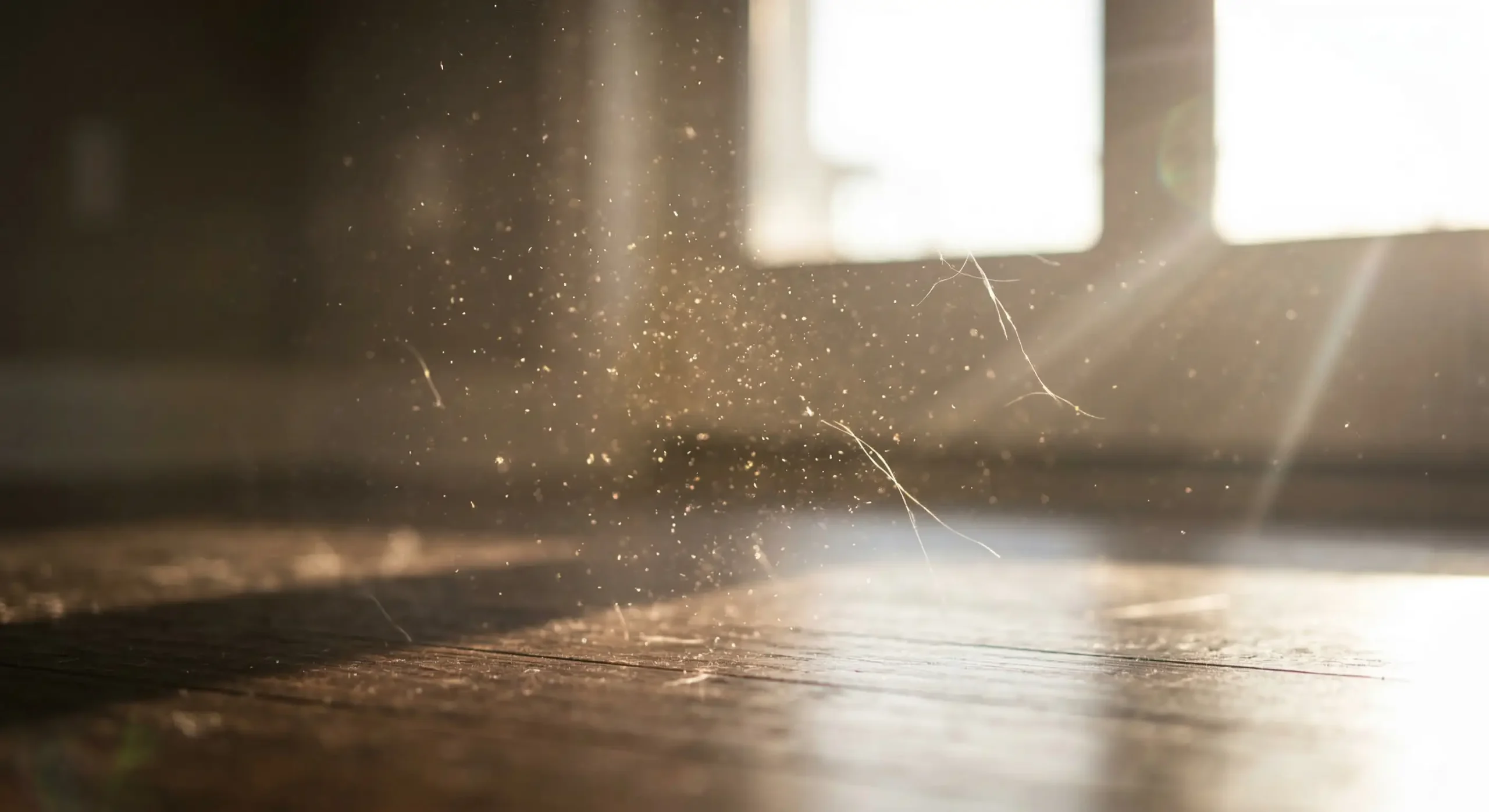
For that thin layer of hair you can see when sunlight hits the floor, a dry microfiber mop is often enough.
The wide head covers a lot of space quickly, slides under furniture, and makes it easy to work your way around a bedroom or living room without turning it into a project.
The catch is that you eventually have to clean the mop pad.
If you live with a heavy shedder, a microfiber head can load up faster than expected. You may get halfway through the house and realize you are mostly moving yesterday's Golden Retriever around with you.
That's not a reason to stop using one. It just means the pad needs attention before you keep going.
For lighter daily cleanup, microfiber is one of the least complicated options in the closet.
A Vacuum Is Perfectly Fine on Hardwood—If It's Set Up for Hardwood
There is no need to treat a vacuum like the enemy of a wood floor.
It can be the better choice when the mess is more than hair: kibble near the dog bowl, crumbs under the breakfast table, bits of dirt near the back door, or fur packed into the space under a sofa.
The important part is using the vacuum the way its manufacturer recommends for hard floors.
Some machines have a dedicated hard-floor setting. Some let you switch off the rotating brush roll. Others use a separate floor attachment.
If you are not sure, check the instructions rather than guessing.
And keep an eye on the wheels and floor head. A piece of grit stuck underneath a cleaning tool is a bigger concern on a finished wood floor than whether the machine happens to be called a vacuum.
Then There Is the Hair That Just Scoots Away From You
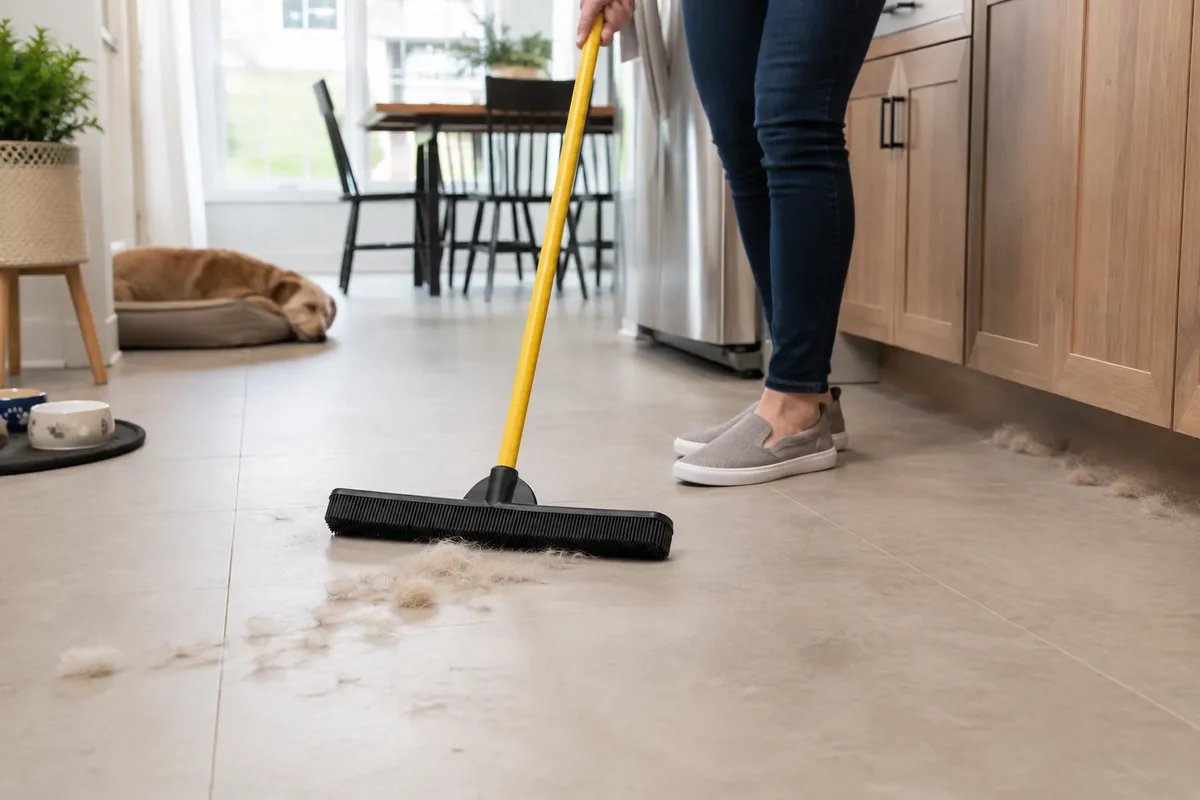
This is where a rubber broom becomes useful.
Light dog or cat hair has a habit of sliding across smooth flooring. You make one pass, the hair moves six inches, and suddenly you are following it toward the kitchen.
Rubber bristles give you another way to gather it.
Instead of trying to sweep with big dramatic strokes, work the broom across the floor and bring the loose hair toward one area. Once you have a pile, pick it up or vacuum it.
Simple.
There is no need for a story about invisible magnetic forces or a “secret” cleaning principle. The useful part is that rubber bristles can help gather loose hair that is otherwise annoying to control on a smooth floor.
For larger rooms, a full-size broom makes the most sense. The FURemover Original 58″ Rubber Pet Hair Broom & Squeegee has a standard-width head and adjustable handle, so it fits normal whole-room floor cleanup better than a handheld tool.
If you want to compare the different sizes first, the Rubber Brooms section shows the current FURemover broom options.
The Hair Is Usually Hiding at the Edges Anyway
The middle of the room is rarely the whole problem.
Look along the baseboards.
Then check under the couch.
Then under the dog bed.
If you have floor vents, look around those too.
Air movement, footsteps, pets running through the room, and ordinary household traffic all push lightweight hair toward edges and low-traffic spots. That is why a room can look clean from the doorway while there is enough fur under the sofa to build a small second pet.
Dining chairs are another good hiding place. Hair catches around the legs, especially if the dog likes to sit nearby while people eat.
Bedrooms have their own version: under the bed, behind nightstands, and wherever the cat likes to disappear for the afternoon.
So before doing three more passes through the center of the room, check the perimeter.
That is usually where the missing hair went.
Don't Confuse Picking Up Hair With Cleaning the Floor
This distinction matters more than it sounds.
Removing pet hair is a dry-debris job.
Cleaning the hardwood itself is a different job.
Once the fur, dust, crumbs, and grit are gone, you may decide the floor actually needs cleaning. Maybe there are paw prints. Maybe something spilled. Maybe it has simply been a while.
That is when the floor's own care instructions matter.
Wood floors are not all finished the same way, and “hardwood-safe” is not a magic phrase that makes every cleaner appropriate for every surface.
If you know the flooring brand or finish, follow its recommendations.
If you don't, avoid experimenting with lots of water or a random homemade mixture because somebody on social media said it worked on their kitchen.
Pet hair does not require soaking the floor.
What About the Squeegee Side of a Rubber Broom?
Several FURemover brooms have a built-in squeegee edge.
That can be useful for suitable wet cleanup, but it does not turn the broom into a complete hardwood-floor cleaning system.
A squeegee is not something you need to run over the room after every dry pet-hair cleanup, and it is definitely not necessary for removing invisible “dander” from the finish.
Use it when you actually have an appropriate wet-cleanup job and the floor surface allows it.
Otherwise, leave the floor dry and keep the job simple.
How Often Should You Pick Up Pet Hair?
Whenever the amount of hair is bothering you.
That sounds almost too obvious, but it is more useful than pretending every pet household needs the same schedule.
A short-haired cat in a one-bedroom apartment is not the same as two German Shepherds in a suburban house.
Shedding changes through the year. So does how much time pets spend indoors. Some floors show every light-colored hair immediately; others hide it until a little pile starts forming along the wall.
A quick pass when you notice buildup is usually easier than waiting until the entire room needs attention.
For one household, that may mean most days.
For another, a couple of times during the week is plenty.
There is no prize for cleaning a floor that does not need cleaning.
One Small Habit Helps More Than Buying Another Tool
Pay attention to the places where the hair starts.
If the dog sleeps beside the couch, clean that area before the fur spreads across the room.
If the cat owns one particular sunny corner, that is probably where the biggest concentration will be.
If most of the hair appears near the back door after walks, deal with that section first.
And wash pet blankets and removable bed covers regularly. Otherwise, you can clean the hardwood beautifully and put a furry blanket straight back on top of it.
The floor is often the last stop in the problem, not the first.
Keep It Simple
You do not need a complicated hardwood routine just because you have pets.
Use a microfiber mop when you want a quick dry pass.
Use a suitable vacuum when there is hair mixed with dirt, crumbs, or debris under furniture.
Use a rubber broom when loose fur keeps moving around the floor and you would rather gather it into one place.
Then wash the floor only when the floor actually needs washing.
That's really it.
The goal is not a permanently hair-free house. Anyone living with a shedding dog or cat knows how realistic that would be.
The goal is getting the hair off the floor without making an ordinary cleanup harder than it needs to be.
For other surfaces around the house, see the Pet Hair Cleaning Guides.