Tile and vinyl are supposed to be the easy floors.
There is no carpet pile for dog hair to disappear into. No couch fabric grabbing every strand. No staircase corners to work through one step at a time.
And yet somehow you can clean the kitchen, turn around, and find three little fur clouds parked beside the cabinets.
Smooth hard floors do not hold pet hair the way carpet does. They let it travel.
A passing dog moves it. The air from a vent moves it. Your feet move it. The vacuum can move it if the floor head is not behaving particularly well.
Eventually, the hair settles into grout lines, along baseboards, underneath cabinet edges, beside the refrigerator, or around the pet bowls.
The easiest way to deal with it is usually to keep the job dry at first.
Pick Up the Hair Before You Reach for the Mop
If the problem is loose dog or cat hair, start by removing the hair.
Not by washing the floor.
It sounds obvious until you see what happens when a wet mop reaches a furry kitchen. Loose strands stick to the damp mop head, collect along the edges, and turn into little wet clumps that are more annoying to pick up than the original mess.
So do the dry work first.
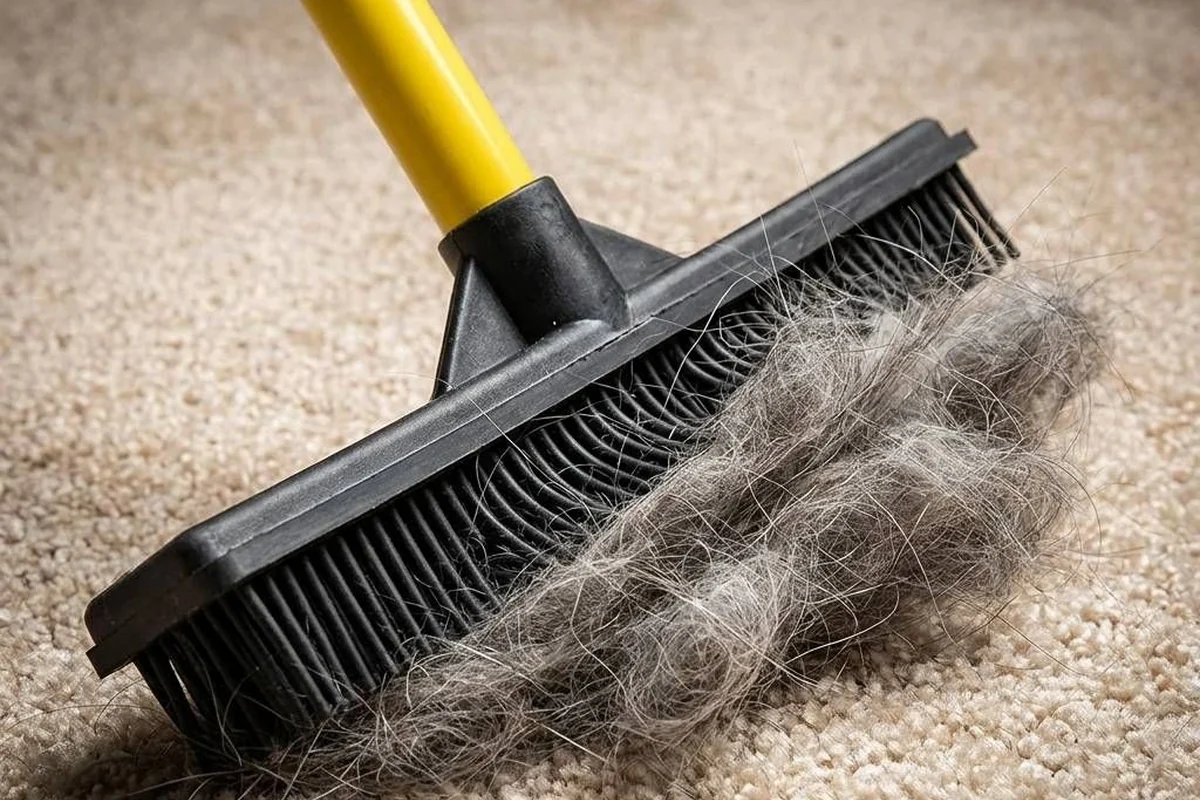
Use a microfiber dust mop, a suitable vacuum, a soft floor tool, or a rubber broom to collect the loose fur.
Once the hair, crumbs, dust, and grit are gone, you can decide whether the floor actually needs to be washed.
Sometimes it does.
Sometimes what looked like a dirty floor was mostly a Labrador.
Tile and Vinyl Have the Same Hair Problem, but Different Details
Both are hard floors, so loose hair tends to stay on the surface rather than burying itself.
That does not mean they behave exactly the same way.
Tile has grout joints.
Depending on the tile and installation, those joints may sit slightly below the surface and give lightweight hair a convenient place to collect.
Vinyl may be very smooth, or it may have an embossed texture designed to resemble wood, stone, or another material. Plank and tile-style vinyl also create lines and edges across the floor that can make a quick cleaning pass less perfect than it looked from standing height.
For ordinary pet-hair removal, you do not need a separate cleaning system for every variation.
You just need to look at where the fur is actually stopping.
A Dry Microfiber Mop Is Great for the Easy Stuff
When there is a light layer of loose hair across an open kitchen, hallway, bathroom, or laundry room, a microfiber floor mop is difficult to overcomplicate.
Move it across the floor and gather the hair as you go.
The wide, low-profile head is especially useful in rooms where much of the fur is simply sitting on top of the surface. It can also reach underneath some cabinets, tables, beds, and other furniture without moving everything out of the way.
The important part is not continuing forever with a loaded pad.
Once the microfiber is covered in hair, clean or change it according to the mop's instructions rather than dragging the collected fur around the rest of the room.
For a small amount of everyday shedding, that may be all the floor needs.
A Vacuum Makes More Sense When Hair Is Mixed With Everything Else
Pet households rarely produce a perfectly organized pile containing only hair.
The kitchen has crumbs.
There may be kibble beside the bowls.
The entryway has dirt.
The laundry room somehow contains pieces of things nobody remembers dropping.
That is where a vacuum can be more convenient than chasing each kind of debris separately.
Use a floor head or setting intended for the surface you are cleaning.
The goal is to pick things up, not send the lightest dog hairs skating away ahead of the machine.
If your vacuum has different settings or attachments for hard flooring, follow its instructions rather than assuming the carpet setup belongs on tile or vinyl too.
Also check the underside of the floor head occasionally.
A little piece of grit caught in a wheel or attachment is not something you want to repeatedly drag across a finished floor.
Then There Is the Hair That Refuses to Stay in One Place
Some pet hair does not seem stuck at all.
That is almost the problem.
You move toward it and it moves away.
You sweep toward the kitchen door and half the pile turns around and heads back toward the refrigerator.
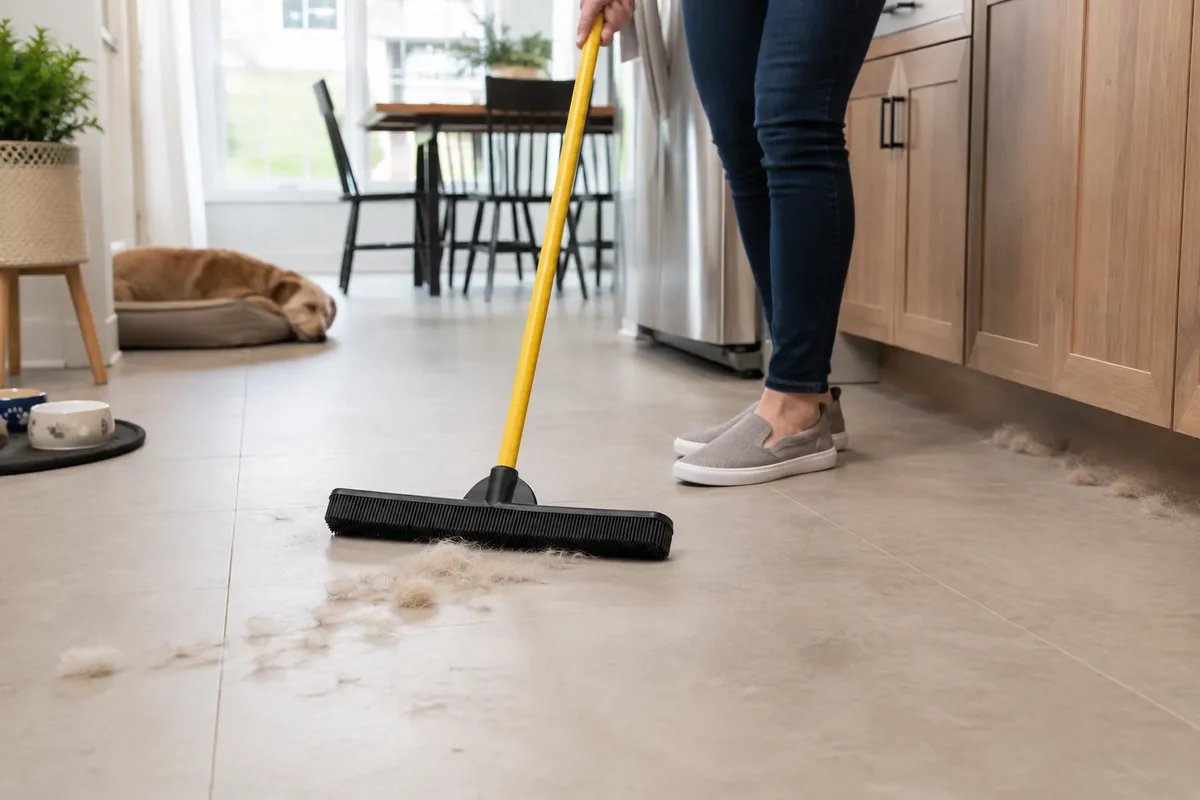
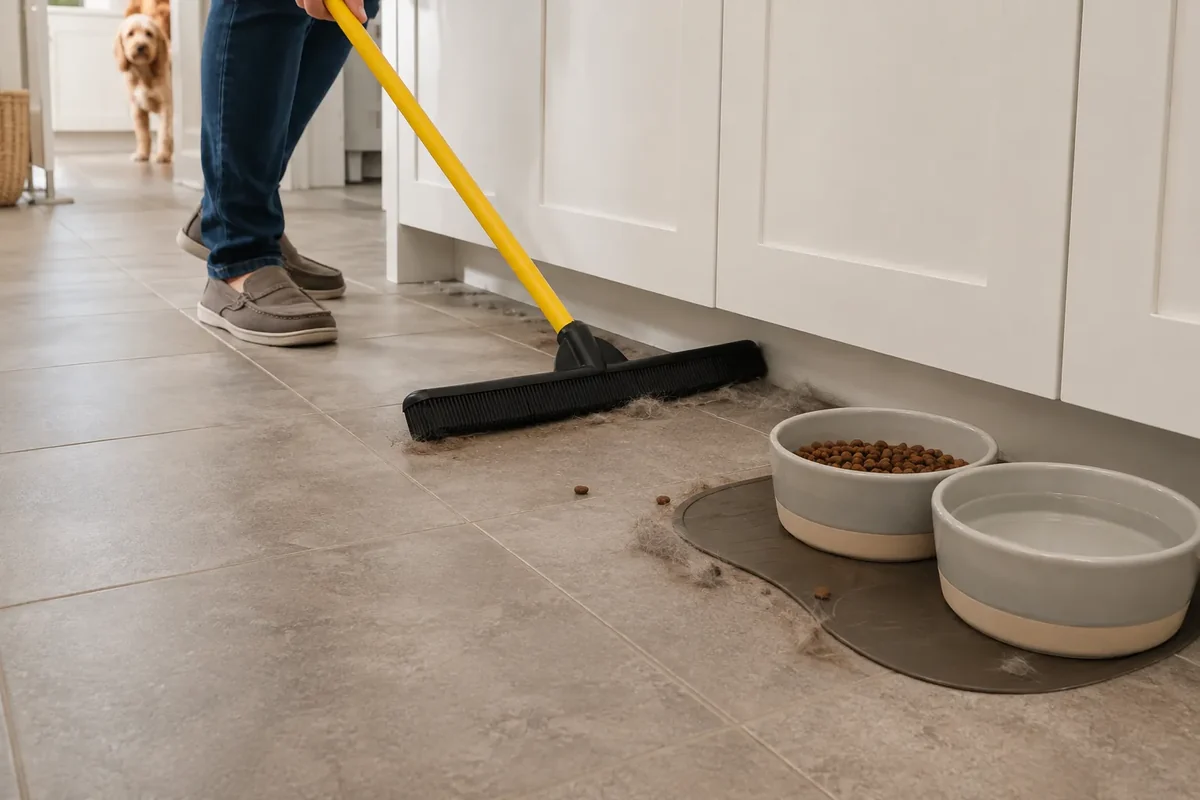
A rubber broom can be useful here because it gives you a different way to bring scattered strands together.
Use controlled passes rather than trying to launch everything across the room in one enormous sweep.
Gather the loose hair into a manageable area, then pick it up or vacuum the pile.
On a large kitchen, hallway, or other open floor, a full-size tool is usually more practical than a small handheld brush.
The FURemover Original 58″ Rubber Pet Hair Broom & Squeegee is one long-handled option already suited to this kind of whole-floor cleanup. If you are comparing sizes, the Rubber Brooms section shows the current FURemover floor-broom options.
You still do not need the rubber broom for every pass.
If microfiber already picked everything up, the job is finished.
Grout Lines Deserve Their Own Look
Tile has one place vinyl generally does not: the network of joints running between individual tiles.
Those lines can make an otherwise clean floor look furry around the edges.
Run your normal floor tool over the room first.
Then look closely.
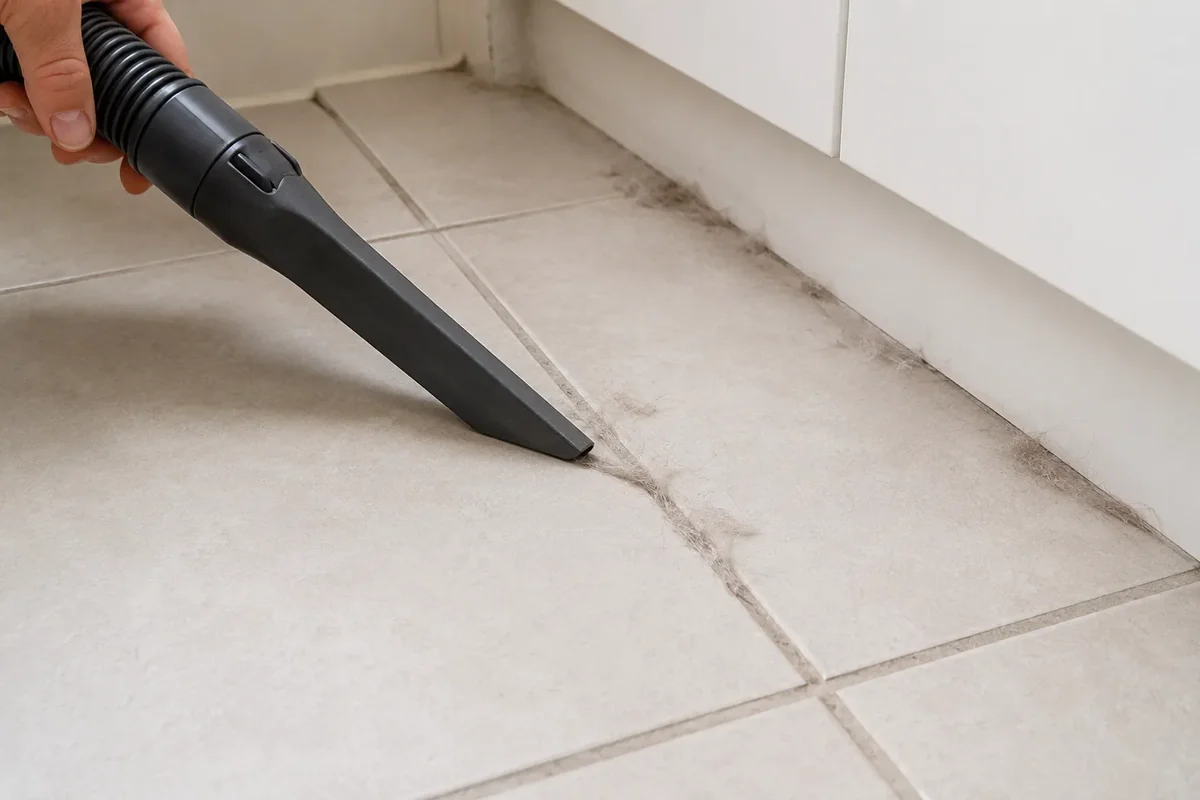
If a few hairs are sitting along a grout line, a vacuum floor attachment may collect them without any special effort. For hair gathered where grout meets a wall or cabinet, the crevice attachment can be more useful.
What usually does not help is aggressively scrubbing every grout joint just because you found three dog hairs.
Pet-hair removal and grout cleaning are different jobs.
If the grout itself needs cleaning, handle that separately using a method appropriate for the tile and grout in your home.
For the fur, you mostly need to get it loose and pick it up.
Textured Vinyl Can Hide More Than Smooth Vinyl
Some vinyl floors look almost perfectly flat.
Others have grain, grooves, or an embossed finish that becomes much more obvious when you get down closer to the surface.
Loose hair can sit across that texture instead of sliding neatly into one pile.
If a microfiber mop leaves visible strands behind, try changing direction on the next pass or use a suitable vacuum or rubber floor tool for the remaining hair.
There is no benefit in pressing harder and harder against the flooring.
You are collecting loose fur, not sanding the texture out of the floor.
And if you are using any unfamiliar tool on a new floor, trying it first in a less noticeable area is a much more sensible approach than discovering halfway across the kitchen that you dislike what it is doing to the finish.
The Area Around Pet Bowls Is Usually a Mixed Job
The floor around food and water bowls deserves special attention because the mess is rarely just hair.
There may be kibble.
There may be water.
There may be whatever your dog carried into the room immediately before deciding it was dinner time.
Pick up the dry debris first whenever practical.
If water has already spilled, deal with the wet area according to the flooring's care requirements rather than sweeping dry dirt and pet hair straight through it.
And move the bowls occasionally.
A surprising amount of fur can collect underneath a feeding mat, raised bowl stand, or storage container while the visible floor around it still looks fine.
The same thing happens under litter mats and pet-water stations.
Clean floor around the object does not necessarily mean clean floor under the object.
Cabinet Toe Kicks Are Tiny Pet-Hair Parking Lots
Kitchens create one particularly good hiding place: the recessed area underneath the cabinets.
A full-size floor head may pass right in front of it.
The hair stays six inches farther back.
A low-profile microfiber tool or vacuum attachment can help reach underneath. A smaller brush may be useful around the corners and cabinet ends.
Also check beside the refrigerator and other large appliances where there is an accessible gap.
Do not start pulling heavy appliances across the room just because you suspect there might be a few hairs underneath them.
Clean what can be safely reached during normal maintenance.
If an appliance needs to be moved for cleaning, follow its installation or moving guidance and avoid turning a five-minute pet-hair job into an afternoon involving a refrigerator.
For more of these awkward areas, see How to Remove Pet Hair from Baseboards, Corners, and Under Furniture.
Don't Ignore the Baseboards Just Because the Floor Is Smooth
Pet hair drifting across tile or vinyl has to stop somewhere.
Very often, that somewhere is the wall.
You may see a thin line of fur following the edge of the kitchen even though the open floor looks completely clean.
A crevice attachment works well for accessible edges.
A dry microfiber cloth can handle a small amount of loose hair.
And a narrow handheld rubber tool can be easier than trying to push a full-width broom perfectly against every corner.
There is no reason to repeatedly sweep the middle of the room when the remaining hair is sitting around the perimeter.
Go where the hair went.
Mixed Flooring Is Where One-Tool Cleaning Gets Silly
Many homes do not have one surface from wall to wall.
The kitchen may be vinyl.
The adjoining dining room may be hardwood.
There may be a rug in between.
The mudroom might be tile.
Trying to clean that entire route with one tool in exactly the same way is usually more awkward than changing methods when the surface changes.
Use what works for the section in front of you.
A microfiber mop may fly across the vinyl kitchen.
A vacuum may be better around a rug and the crumbs underneath the table.
A rubber broom may help gather the loose hair that keeps drifting through the hallway.
If the next room is real wood, the separate How to Remove Pet Hair from Hardwood Floors guide covers that surface in more detail.
The floor does not care whether you complete the entire house with one heroic cleaning tool.
Washing Comes After the Hair Is Gone
Once the loose hair and debris are off the floor, take another look.
Does it actually need mopping?
If there are paw marks, spills, kitchen residue, or ordinary dirt, maybe it does.
At that point, follow the care guidance for the exact flooring you have.
“Tile” can describe more than one material, and vinyl products vary too. The right cleaner and wet-cleaning method for one floor should not automatically be assumed appropriate for another.
There is also no reason to invent a stronger homemade solution simply because pets live in the house.
Pet hair itself does not require a special liquid cleaner.
Get the hair up.
Then clean the floor for whatever is still on the floor.
Keeping those two jobs separate makes both of them easier.
You Probably Don't Need a Daily Whole-House Routine
How often should you remove pet hair from tile or vinyl?
When enough of it has collected that you want it gone.
A household with one short-haired cat is different from a home with two large dogs.
A white floor may advertise every dark hair immediately.
A patterned vinyl floor may hide the same amount until it drifts into the corner.
Shedding changes too.
Rather than following an arbitrary schedule, notice which parts of the room collect hair fastest.
The area beside the dog bed may need attention long before the rest of the floor.
The kitchen may only get furry near the bowls.
One hallway may act like a highway for every loose strand in the house.
Cleaning those small trouble spots before the hair spreads is often easier than repeatedly cleaning every square foot.
The Floor Usually Tells You What Tool You Need
If the hair is lying loosely across an open floor, start simple.
A dry microfiber mop may be enough.
If the fur is mixed with crumbs and dirt, use an appropriate vacuum.
If lightweight strands keep sliding away instead of gathering, try a rubber broom.
If the center looks clean but fur remains along the walls, stop cleaning the center and switch to an edge tool.
And if the hair is underneath cabinets or furniture, use something that can actually reach underneath them.
Tile and vinyl are not difficult pet-hair surfaces.
They are just very good at moving the evidence somewhere else.
Once you know where to look, the job becomes much smaller: pick up the loose hair first, clean the problem areas it collects in, and mop only when the floor itself actually needs cleaning.
For more room- and surface-specific cleanup ideas, visit the Pet Hair Cleaning Guides.