Carpeted stairs have a special talent for looking clean from the hallway and completely different once you get close.
The middle of each step may be fine. Then you notice a strip of dog hair tucked against the wall. There is another little fur pile where the tread meets the riser. The top landing has its own collection, and somehow the cat has contributed hair to a staircase it barely seems to use.
A regular carpeted room gives you space to work. Stairs do not. They are narrow, broken into edges and corners, and not especially friendly to a full-size vacuum head.
That changes how you clean them.
Start With Whatever the Vacuum Can Reach Easily
There is no reason to make this harder than it needs to be.
If your vacuum has a hose and a carpet or upholstery attachment that works well on the stairs, start there. Pick up the loose fur, dust, crumbs, and grit before worrying about the strands that are hanging onto the carpet.
Work one step at a time.
The broad middle of the tread is usually the easiest part. The trouble starts near the walls and along the little inside corner where the horizontal tread meets the vertical riser.
That is where the regular floor head tends to miss things.
A crevice attachment is useful there, especially along the edges and around stair trim.
One thing that is not worth doing: trying to balance a heavy upright vacuum awkwardly on the staircase while you clean around it. Use the machine and attachments according to its instructions, and keep the vacuum itself somewhere stable.
Pet hair is annoying. Sending a vacuum down the stairs is worse.
The Edges Are Usually Dirtier Than the Middle
Look closely at the outside two or three inches of a carpeted step.
That narrow strip can hold more visible hair than the rest of the tread.
People naturally walk through the middle. Vacuum heads naturally spend more time there too. Meanwhile, loose fur gets pushed toward the sides and stays put.
The same thing happens in the corner where the tread meets the riser.
That line deserves its own pass.
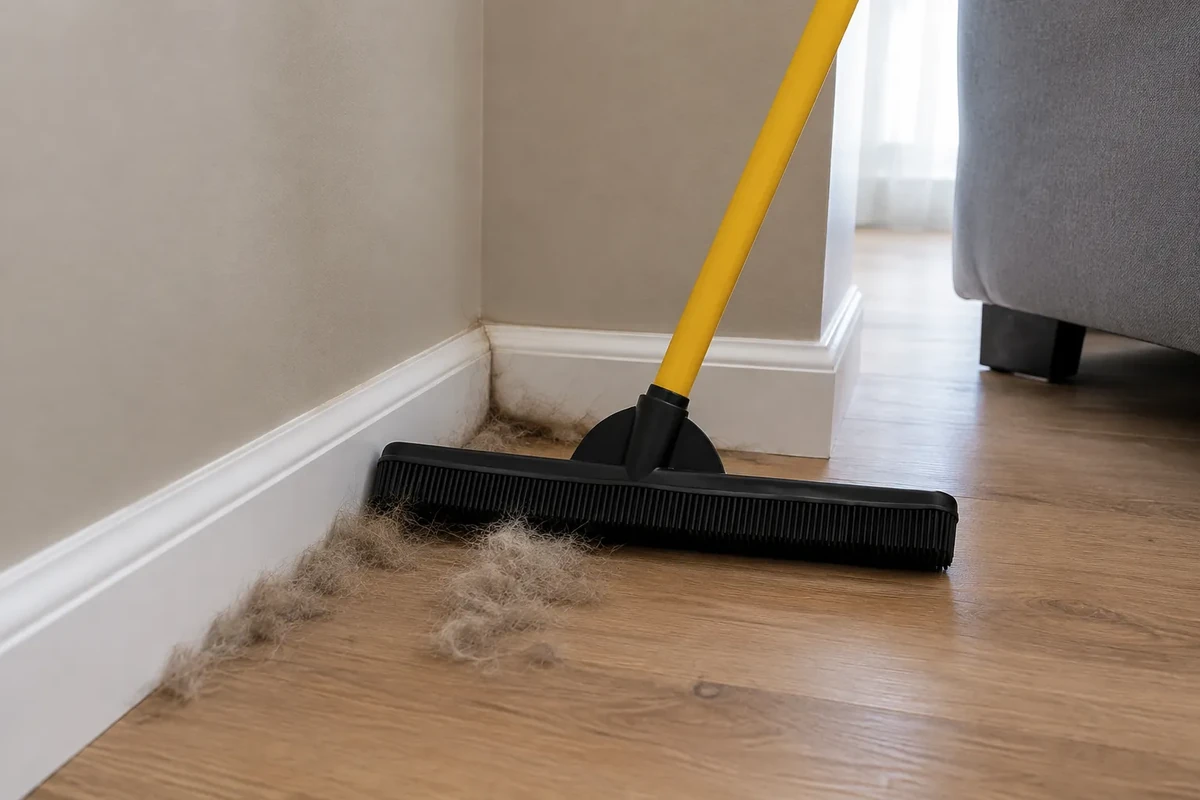
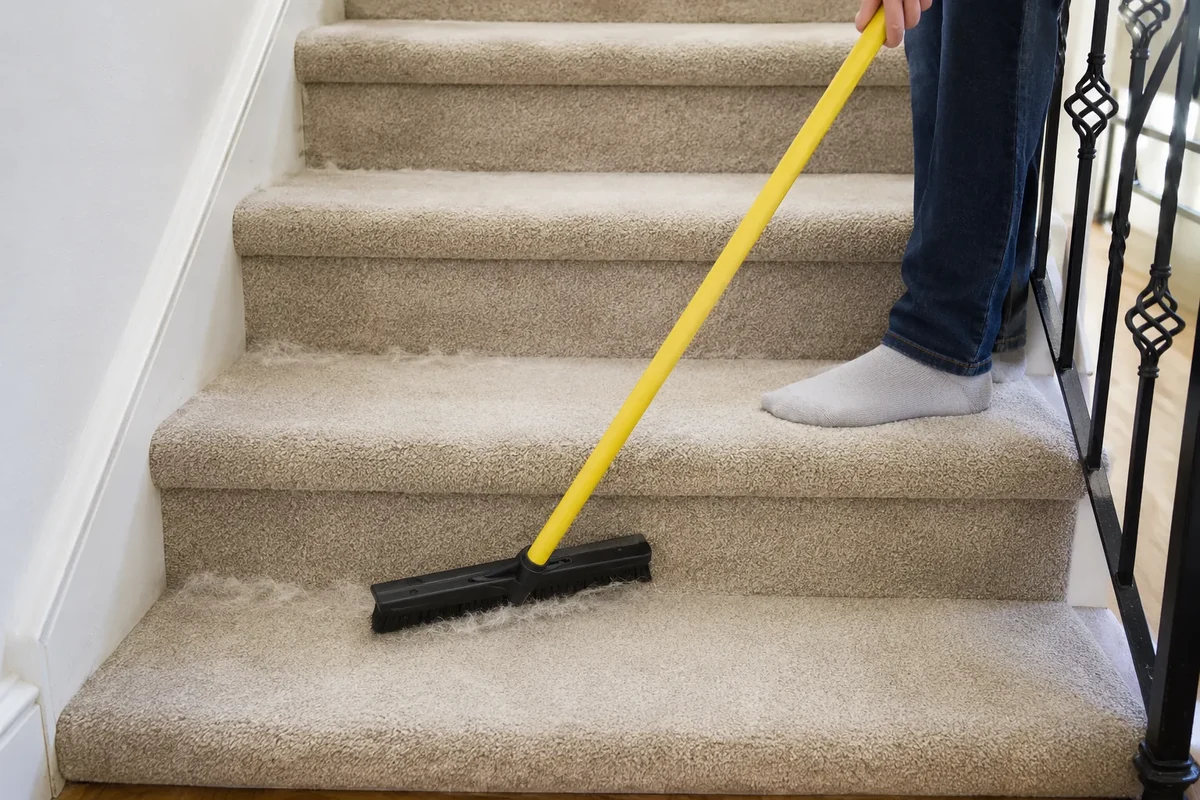
Use the crevice tool first. If visible hair remains, a small rubber brush or other carpet-compatible rubber tool can help pull it together where the vacuum head cannot get good contact.
You do not need to scrape at the carpet.
A few short passes are usually more sensible than digging aggressively into the edge.
When the Vacuum Leaves a Fuzzy Strip Behind
Sometimes you vacuum a step and the carpet looks cleaner, but there is still a thin furry patch staring back at you.
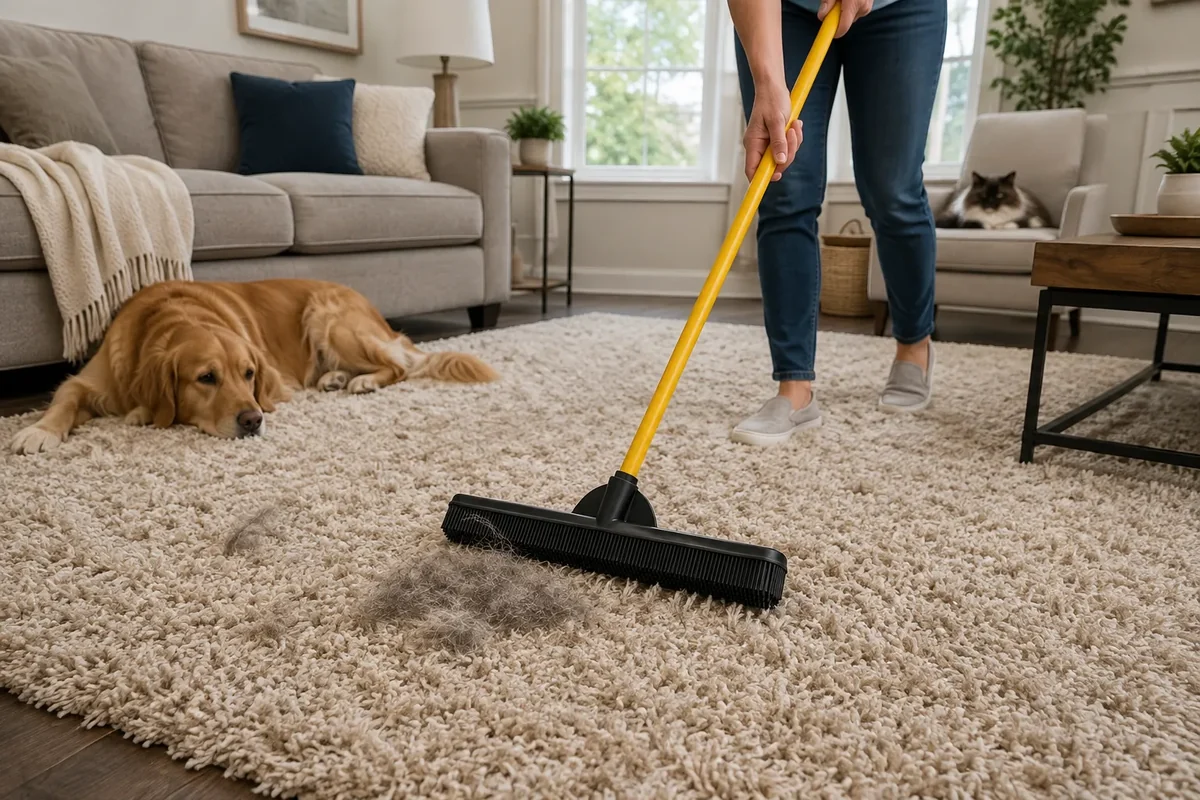
This is the same problem that shows up on larger rugs: some hair comes up easily and some does not.
A rubber tool can be useful for the second kind.
Work across a small section of carpet and see whether the hair starts gathering together. On a stair tread, you are not trying to create a giant pile. Even a small ridge of fur is easier to pick up than dozens of individual hairs scattered through the pile.
Collect it as you go.
You can pick the clump up by hand or vacuum it once it is sitting loose on top of the carpet.
For a wider explanation of that process, see How to Remove Pet Hair from Carpet and Rugs.
Don't Forget the Risers
It is easy to clean every horizontal step and completely ignore the vertical carpet in between.
Then you stand at the bottom of the staircase and wonder why it still looks furry.
Pet hair can cling to carpeted risers too, particularly in homes with long-haired pets or stairs close to a favorite sleeping area.
A vacuum hose attachment is usually easier here than trying to turn a floor tool sideways.
If a few stubborn hairs remain, a small manual rubber tool may be easier to control than a full broom.
Work gently. A vertical surface gives you less support, and there is no reason to pull hard at the carpet fibers just to remove a few hairs.
Stairs With Looped or Shag Carpet Need More Caution
Not every carpeted staircase should be brushed the same way.
A short, ordinary pile is one thing.
Looped carpet, thick shag, or a more delicate runner can behave very differently.
Before using a rubber broom or brush over an unfamiliar stair carpet, try it on a small area first.
Watch what happens to the fibers.
If loops begin catching, yarn starts pulling, or the surface becomes fuzzy where you have worked, stop.
More pressure is not the answer.
This matters even more with decorative stair runners and specialty carpeting. Some are there because they look beautiful, not because they enjoy being aggressively raked by every cleaning tool in the closet.
When you know the carpet manufacturer or installer, their care guidance should take priority.
The Landing Can Be a Different Job
The top or bottom landing often collects more hair than the stairs themselves.
Pets pause there.
People turn there.
Airflow moves lightweight fur toward walls and corners.
And unlike a narrow tread, a landing gives you enough room to use a normal floor tool.
If loose pet hair is spread across a carpeted landing, vacuum it normally first.
For stubborn visible hair, this is where a full-size rubber broom becomes more practical than it is on an individual stair.
If you are comparing floor-size options, the Rubber Brooms page shows the current FURemover broom sizes.
On the steps themselves, however, smaller and easier-to-control tools are often less awkward.
Work From the Top Down—Mostly Because Gravity Exists
There is no need to turn this into a professional cleaning ritual, but one habit makes sense: start near the top and work your way down.
Hair, crumbs, and little bits of debris have a habit of dropping onto the step below while you clean.
If you begin at the bottom, you may end up cleaning the same tread again.
Starting from the top lets whatever escapes move toward an area you have not finished yet.
That said, do not stretch across several steps just to maintain a perfect sequence.
Comfortable reach matters more than cleaning-theory elegance.
Move your tools with you and keep the working area manageable.
A Stair Runner Has Two Extra Hair Traps
If your stairs use a runner instead of wall-to-wall carpet, look at both sides of it.
The line where the runner ends and the exposed floor begins can collect fur surprisingly quickly.
Hair can sit partly on the carpet and partly on the wood or other hard surface beside it.
That usually calls for two different motions rather than trying to clean both surfaces with the same aggressive pass.
Handle the carpeted runner according to its material and use a suitable hard-floor method on the exposed section.
If the bare part is wood, the hardwood pet-hair guide covers that separately.
The Pet's Route Through the House Matters
Sometimes the staircase is not especially furry because of the stairs.
It is furry because of what is at the top or bottom.
A dog bed beside the landing can supply a steady stream of loose hair. So can a favorite upstairs bedroom. A cat that sits on one particular step every afternoon will eventually make that step look different from the rest.
Notice where the buildup actually starts.
If one landing or one step is always worse, dealing with that small area more often may save you from doing the entire staircase every time.
The same goes for washable pet blankets nearby. A freshly cleaned staircase will not stay that way for long if a furry blanket is shedding onto it again that evening.
You Don't Need to Deep-Clean the Stairs Every Time You See Hair
Visible fur is a dry cleanup problem.
A stain is a different problem.
An odor is a different problem.
And a carpet that needs extraction or professional cleaning is definitely a different problem.
Do not reach for carpet shampoo just because there are dog hairs stuck around the edge of a step.
Get the hair and loose debris out first.
If the carpeting actually needs wet cleaning afterward, follow the care instructions for that carpet and whatever cleaning equipment you are using.
Keeping those jobs separate makes stair cleaning much less of an event.
The Easiest Routine Is the One That Doesn't Become a Project
You do not need to haul out every pet-hair tool you own each time you see a fuzzy step.
If the stairs mostly look good, clean the problem areas.
Vacuum the center.
Use the crevice tool along the edges.
Check the tread-to-riser corners.
Work a stubborn patch with a compatible rubber tool if it needs it.
Then stop.
The staircase does not need to pass an inspection.
It just needs to stop looking like your dog has been quietly carpeting it a second time.
For more surface-specific cleanup ideas around the house, see the Pet Hair Cleaning Guides.