You vacuum the living room, put the machine away, and for about five minutes everything looks fine.
Then the afternoon light hits the rug from the side.
There it is again.
A stripe of dog hair near the couch. A fuzzy patch under the coffee table. A little gray cloud along the baseboard that somehow survived the whole cleanup.
That does not automatically mean your vacuum is bad. Pet hair can be stubborn in carpet, especially where it has been walked on, slept on, or worked deeper into the pile. Sometimes the first vacuum pass gets the loose stuff and leaves the annoying part behind.
That is when changing the approach helps.
Give the Vacuum a Fair Shot First
Vacuuming is still the obvious place to start.
It picks up loose hair, dust, crumbs, grit, and all the other things mixed into the carpet that you probably do not want to chase around by hand.
But speed matters.
A quick pass over the room may make the carpet look better without giving the head much time to work on hair sitting lower in the pile. If one area still looks furry, slow down and go over it again.
Then change direction.
If you went north to south the first time, try east to west on the stubborn patch. Carpet fibers do not all sit the same way, and changing your path can expose hair that the first pass missed.
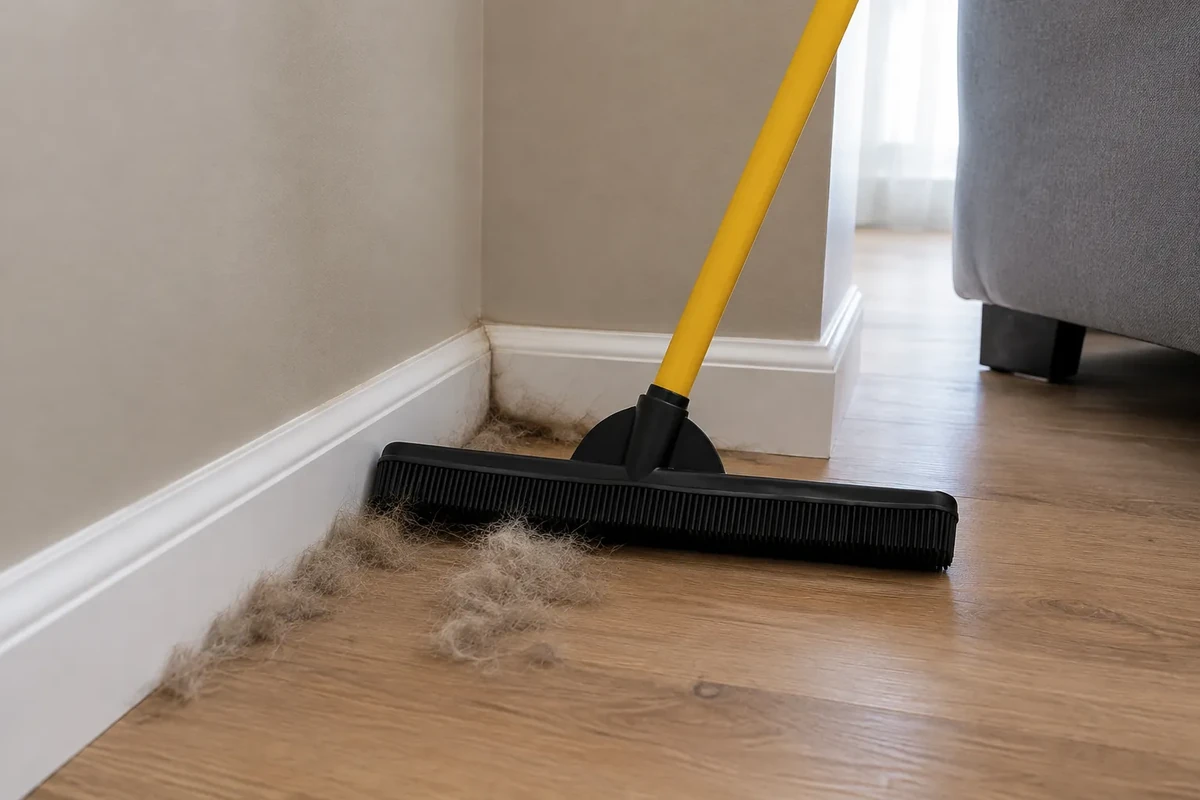
The edges deserve their own attention too. A full-size vacuum head rarely gets all the way against the baseboard, and that narrow strip is exactly where loose fur likes to collect.
Use the edge or crevice attachment there instead of hoping another lap through the middle of the room will fix it.
When the Hair Still Won't Come Up
There is a particular kind of pet hair that looks almost painted onto carpet.
You can see it.
You can touch it.
The vacuum passes over it, and most of it stays right where it was.
A manual rubber tool can be useful here.
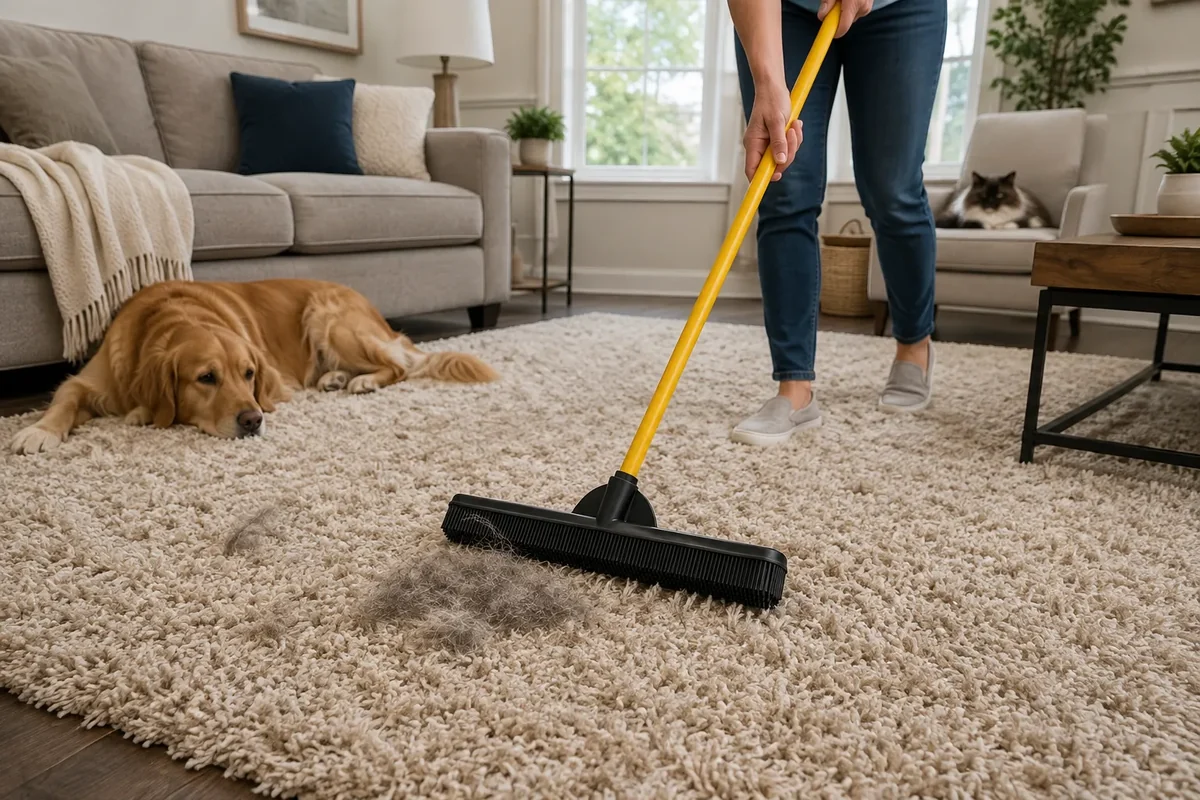
The goal is not to scrub the carpet until your arm hurts. Work a smaller section and let the rubber bristles catch and gather the visible hair.
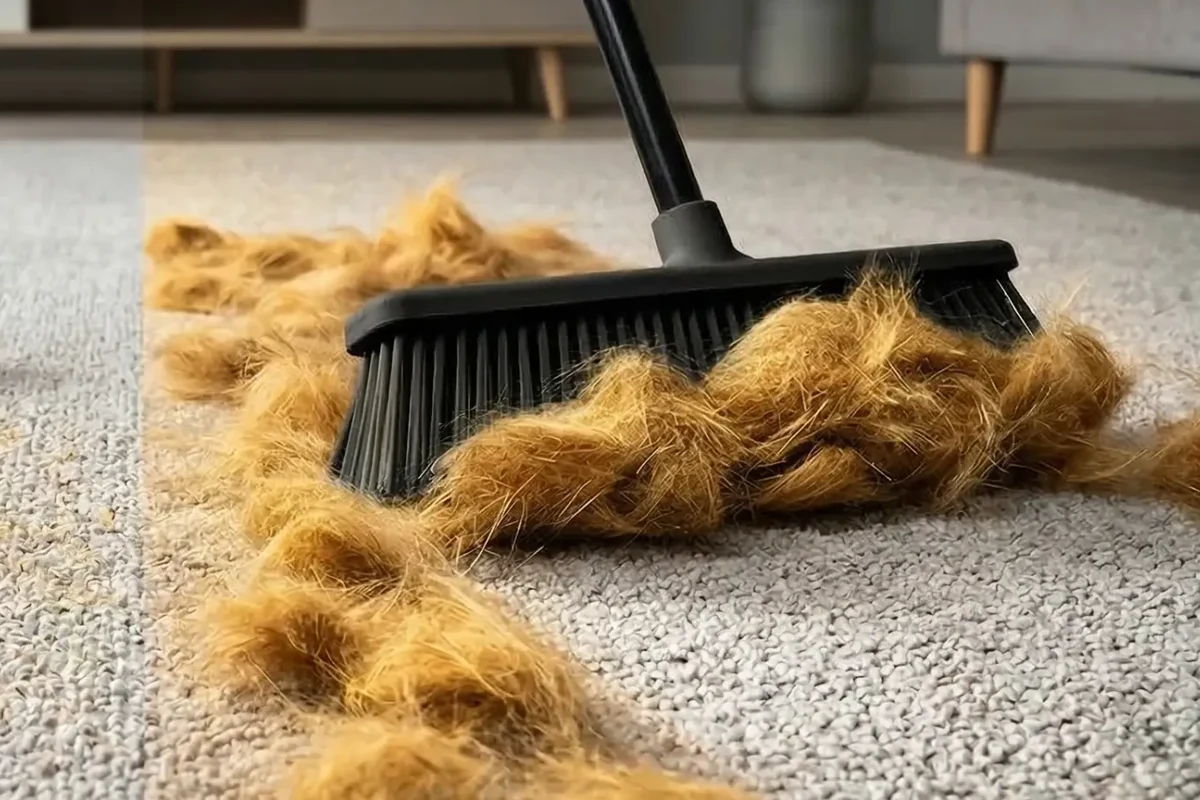
You may see scattered strands start forming into little lines or clumps. Once that happens, pick them up or vacuum them away.
That is usually more productive than spending another ten minutes running the vacuum over the same patch.
A rubber broom works best as part of the cleanup, not as a dramatic replacement for everything else in the closet.
Vacuum what comes up easily. Use the rubber tool where hair is hanging on. Then pick up the pile.
Pretty simple.
The Dog's Favorite Spot Will Usually Be the Worst One
Pet hair is rarely distributed politely across the room.
There is usually one area that gets much more of it.
Maybe the dog sleeps beside the sofa every night.
Maybe the cat has claimed the patch of rug in front of the window.
Maybe your Golden Retriever has decided that the hallway is the perfect place to shake after coming inside.
Those spots can need more attention than the rest of the carpet because the hair is repeatedly pressed down by paws, feet, furniture, or somebody lying on top of it.
Do not waste time treating every square foot of carpet as if it has the same problem.
Clean the room normally, then come back to the places where the fur actually builds up.
That is often where a rubber broom earns its keep.
Not Every Rug Wants the Same Treatment
A basic low- or medium-pile carpet is one thing.
A shag rug, looped carpet, handmade rug, or delicate specialty piece is another.
Before dragging any rubber tool across a rug you care about, test a small, less-visible area first.
Pay attention to the fibers.
If the tool starts catching loops, pulling yarn, creating fuzz, or changing the way the pile sits, stop.
The fact that a broom works well on the family-room carpet does not mean it belongs on every rug in the house.
High-pile carpet can also behave differently from a short, dense pile. Hair may sit deeper, and a manual tool can feel more resistant.
That is a sign to work gently, not an invitation to push harder.
With an expensive, handmade, vintage, or unfamiliar rug, the rug maker's or manufacturer's care guidance matters more than a general pet-hair trick.
The Edges Usually Give You Away
If the carpet still looks furry after the main part of the room is clean, look where the vacuum head does not naturally spend much time.
Along the baseboards.
Under the couch.
Behind the recliner.
Around the dog bed.
Under the coffee table.
Around dining-chair legs.
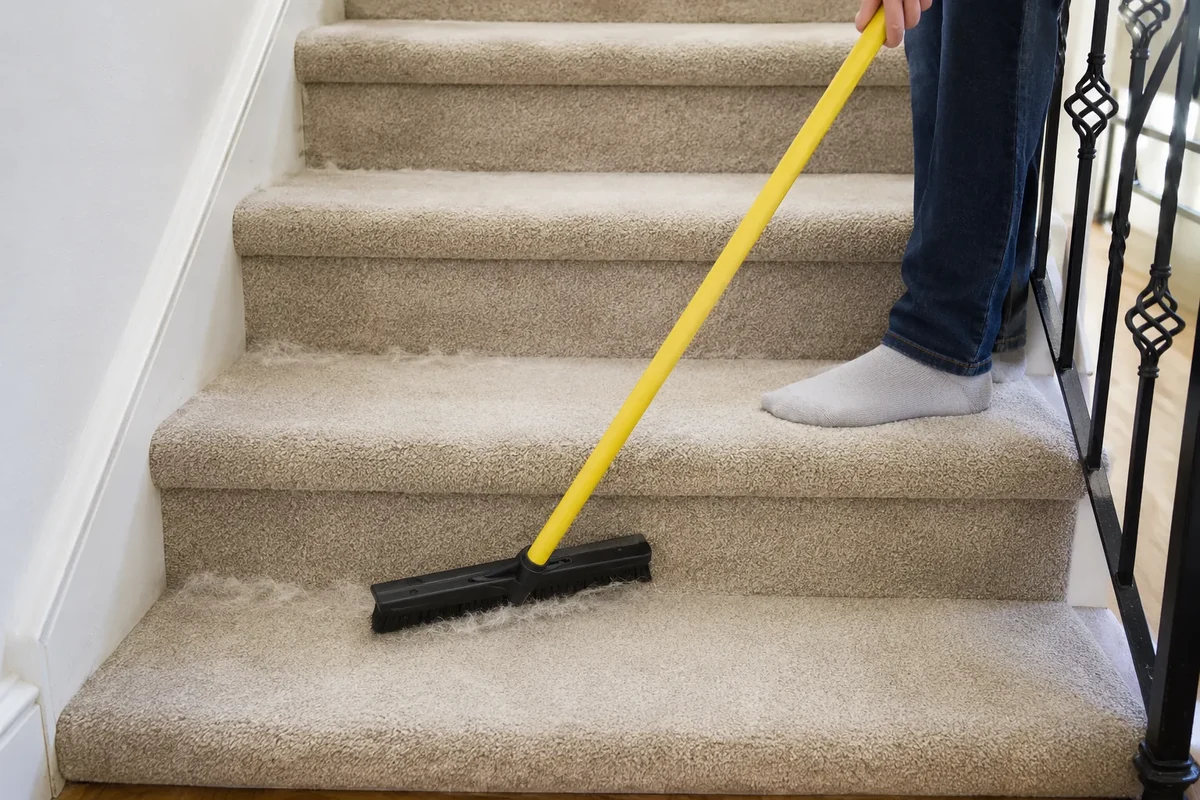
And, if you have carpeted stairs, right where the tread meets the riser.
Hair has a way of drifting toward those places and staying there.
Stairs are especially good at hiding it. The center of each step may look fine while the corners collect enough fur to be obvious once you get close.
A smaller attachment or handheld rubber tool is often easier there than trying to maneuver a full floor head into every corner.
Where a Rubber Broom Fits
For a normal carpeted room or area rug that tolerates it, a full-size rubber broom can be a useful second tool when visible pet hair stays behind after vacuuming.
The FURemover Original 58″ Rubber Pet Hair Broom & Squeegee is the standard-width option in the current FURemover broom lineup. Its rubber bristles can be worked over rugs and carpet to gather loose pet hair before you pick it up or vacuum it away.
There are wider and more compact versions too, but that mostly comes down to room size, storage, and how much floor you want to cover with each pass.
If you are trying to figure out which size makes sense, it is easier to compare them in the Rubber Brooms section than to turn this article into a product catalog.
The important part is not the logo on the handle.
It is using the right kind of tool for the section of carpet that is giving you trouble.
Don't Turn Pet Hair Removal Into Carpet Cleaning
A carpet can be free of visible dog hair and still need cleaning.
Those are two different jobs.
Hair removal is mostly dry pickup.
Vacuuming, brushing, working along edges, and collecting the clumps all belong there.
Stains are different.
So are odors.
So is the deeper dirt that eventually calls for proper carpet cleaning.
A rubber broom does not deep-clean carpet because it pulled up an impressive pile of fur.
And shampooing or wet-cleaning the carpet is not something you need to do every time you see a few hairs.
Keeping those jobs separate makes routine cleanup a lot easier.
Get the dry mess up first.
Deal with stains or deeper cleaning when there is actually a reason to.
If Your Vacuum Suddenly Seems Worse Than Usual
Sometimes the carpet is not the problem.
If a vacuum that normally does a decent job suddenly starts leaving much more hair behind, it is worth checking the obvious things.
Is the bin full?
Does the bag need changing?
Is hair wrapped around the brush roll?
Is the floor head set appropriately for the carpet?
You do not need to take the machine apart in the middle of the living room. Just follow its normal maintenance instructions and make sure it is actually ready to do the job.
Pet hair is very good at wrapping itself around moving parts.
A vacuum that has been swallowing Labrador fur for a month may simply need a little attention.
You Probably Don't Need to Do the Whole Room Twice
This is where pet-hair cleanup gets unnecessarily annoying.
People see one stubborn patch and start the entire room over.
Usually there is no reason.
If ninety percent of the carpet looks clean after vacuuming, leave it alone.
Go after the remaining ten percent.
Use the crevice tool along the wall. Work the pet's favorite sleeping spot with a rubber broom. Check under the coffee table. Pick up the little pile and move on with your day.
The point is not to prove that one cleaning tool is better than another.
It is to stop doing the same thing over and over when that thing has already picked up everything it is going to pick up.
A Rug Can Look Clean and Still Have Hair Hiding in Plain Sight
Dark hair on a dark rug can disappear until you run a hand across it.
Light hair on beige carpet can do the same thing.
Then there are those magic moments when the sunlight hits at exactly the wrong angle and suddenly the entire room seems to be covered again.
That does not mean you failed.
Homes with shedding pets are going to have pet hair in them.
A practical routine is simply to keep the buildup from getting ahead of you: vacuum the loose mess, pay attention to the edges and favorite pet spots, and use a manual tool when some of the visible hair refuses to cooperate.
No ugly truth. No secret physics.
Just a few different tools doing different parts of the same job.
For help with other surfaces around the house, see the Pet Hair Cleaning Guides.